-
Shop
- Advanced Technologies
- AI Career Advantage Collection
- AI Skills Mastery 2026 Collection
- Beauty
- Best-Sellers
- Car Accessories
- Car Buying & Ownership
- Dating & Social Confidence
- Dating & Social Skills
- Denim
- 7FOR
- AGOLDE
- Antony Morato
- Armani Exchange
- Boss
- Brunello Cucinelli
- Calvin Klein Jeans
- Costume National
- Desigual
- Diesel
- Dolce & Gabbana
- Dsquared²
- Ermanno Scervino
- Fendi
- Gianni Lupo
- Guess Jeans
- Ichi
- Just Cavalli
- Lee
- Levi's
- Liu Jo
- Morgan De Toi
- Mother Denim
- Only
- Pepe Jeans
- Pinko
- Replay
- Valentino
- Vero Moda
- Digital Resources
- Education & Learning
- Family & Parenting
- Fashion
- Fashion Accessories
- Financial Education
- Gadgets
- Health & Beauty
- Health & Wellness
- Home & Garden
- Home Decor
- Home Styling & Organization
- Home Supplies
- Kids & Babies
- Kitchen
- Patio, Lawn & Garden
- Personal Growth
- Pet Care
- Pet Supplies
- Pets
- Sport & Outdoors
- Super Deals
- Wealth Building
- Budgeting & Saving
- Cryptocurrency Investing
- Debt Management
- Entrepreneurship & Business Growth
- Family Finance & Budgeting
- Financial Independence
- Financial Mindset & Psychology
- Financial Planning
- Frugal Living & Expense Hacks
- Goal Setting
- High-Income Skills
- Investing Basics
- Leadership
- Motivation
- Networking & Mentorship
- Passive Income Strategies
- Real Estate Investing
- Side Hustles
- Stock Market Investing
- Popular
- Best deals
Plastic Floor Tile Names: Interlocking PVC, Vinyl & More
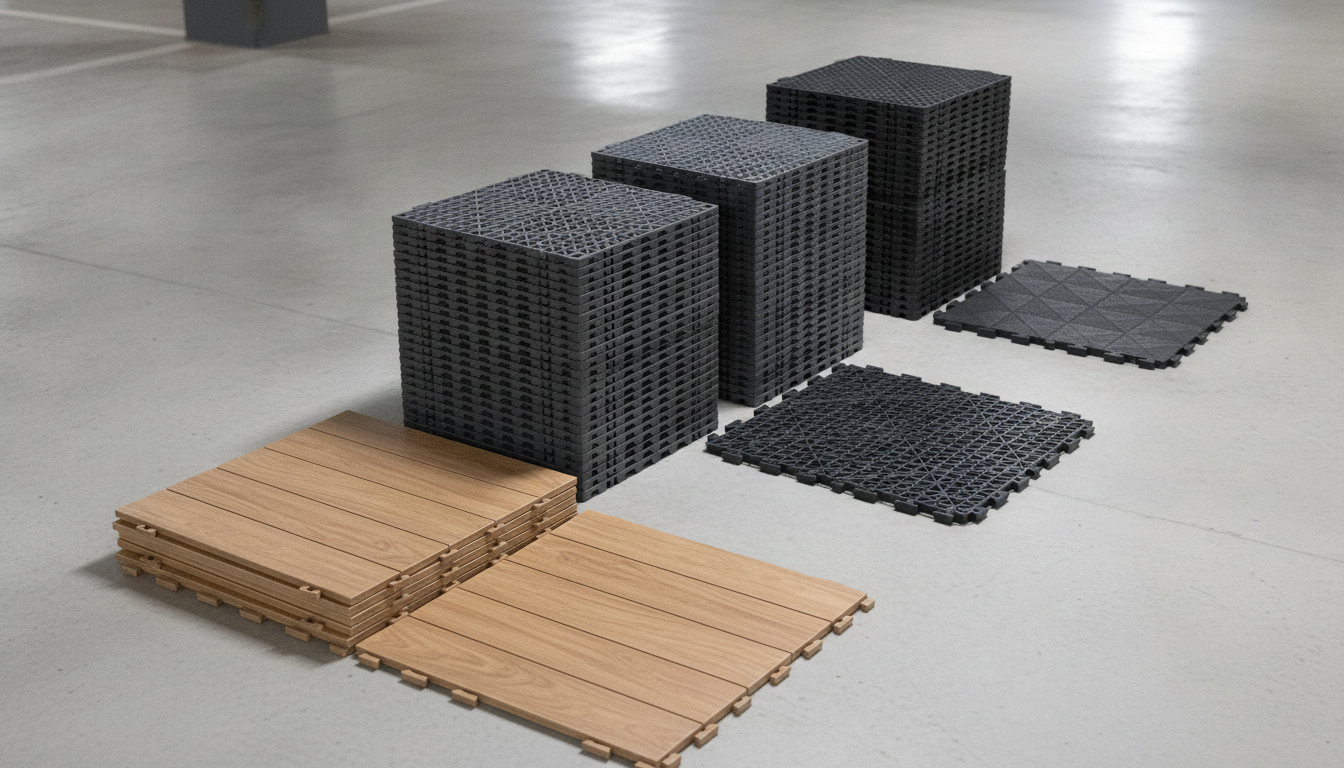
What is the plastic floor tile called?
The most common name for a plastic floor tile is an interlocking PVC floor tile. You’ll also see similar products labeled as modular floor tiles, snap-together floor tiles, or click-lock floor tiles. These tiles are designed to connect edge-to-edge without adhesive, creating a floating floor surface that can be installed quickly over concrete, wood, or existing flooring.
Depending on the style and where it’s used, plastic tiles may go by more specific names. For example, perforated tiles are often called drainage tiles (popular for patios, pool decks, and wet areas), while thicker, solid tiles marketed for garages are frequently called garage floor tiles. Some flexible versions used in gyms are described as rubber-look PVC tiles or soft interlocking tiles, even though the material is still plastic-based.
Common types of plastic floor tiles
Interlocking PVC tiles
These are the classic snap-together tiles used in garages, workshops, basements, and retail spaces. They’re valued for durability, easy replacement (swap a single tile if it’s damaged), and straightforward installation.
Peel-and-stick vinyl tiles
While not “interlocking,” peel-and-stick vinyl tiles are another plastic tile option. They adhere to the subfloor with a pre-applied adhesive backing and are often used for quick DIY updates in kitchens, laundry rooms, and rentals.
Drainage (perforated) tiles
These tiles allow water to pass through, reducing puddling and improving traction. They’re commonly used outdoors and in areas where moisture is expected.
How to choose the right name (and the right tile)
If the product clicks together with tabs or puzzle-like edges, “interlocking PVC floor tile” or “modular floor tile” is usually the correct term. If it sticks down, it’s more likely “vinyl tile.” For wet zones, look for “drainage” or “deck” tiles.
For a deeper breakdown of materials, use cases, and what to look for when shopping, visit the full guide here: https://elixirie.com/what-is-the-plastic-floor-tile-called/.
FAQ
Are interlocking PVC floor tiles good for garages?
Yes. They’re commonly used in garages because they’re durable, resist many automotive fluids, and can be replaced tile-by-tile if one gets stained or damaged.















Leave a comment