-
Shop
- Advanced Technologies
- AI Career Advantage Collection
- AI Skills Mastery 2026 Collection
- Beauty
- Best-Sellers
- Car Accessories
- Car Buying & Ownership
- Dating & Social Confidence
- Dating & Social Skills
- Denim
- 7FOR
- AGOLDE
- Antony Morato
- Armani Exchange
- Boss
- Brunello Cucinelli
- Calvin Klein Jeans
- Costume National
- Desigual
- Diesel
- Dolce & Gabbana
- Dsquared²
- Ermanno Scervino
- Fendi
- Gianni Lupo
- Guess Jeans
- Ichi
- Just Cavalli
- Lee
- Levi's
- Liu Jo
- Morgan De Toi
- Mother Denim
- Only
- Pepe Jeans
- Pinko
- Replay
- Valentino
- Vero Moda
- Digital Resources
- Education & Learning
- Family & Parenting
- Fashion
- Fashion Accessories
- Financial Education
- Gadgets
- Health & Beauty
- Health & Wellness
- Home & Garden
- Home Decor
- Home Styling & Organization
- Home Supplies
- Kids & Babies
- Kitchen
- Patio, Lawn & Garden
- Personal Growth
- Pet Care
- Pet Supplies
- Pets
- Sport & Outdoors
- Super Deals
- Wealth Building
- Budgeting & Saving
- Cryptocurrency Investing
- Debt Management
- Entrepreneurship & Business Growth
- Family Finance & Budgeting
- Financial Independence
- Financial Mindset & Psychology
- Financial Planning
- Frugal Living & Expense Hacks
- Goal Setting
- High-Income Skills
- Investing Basics
- Leadership
- Motivation
- Networking & Mentorship
- Passive Income Strategies
- Real Estate Investing
- Side Hustles
- Stock Market Investing
- Popular
- Best deals
The Savvy Plate: Monthly Food Budgeting Made Easy
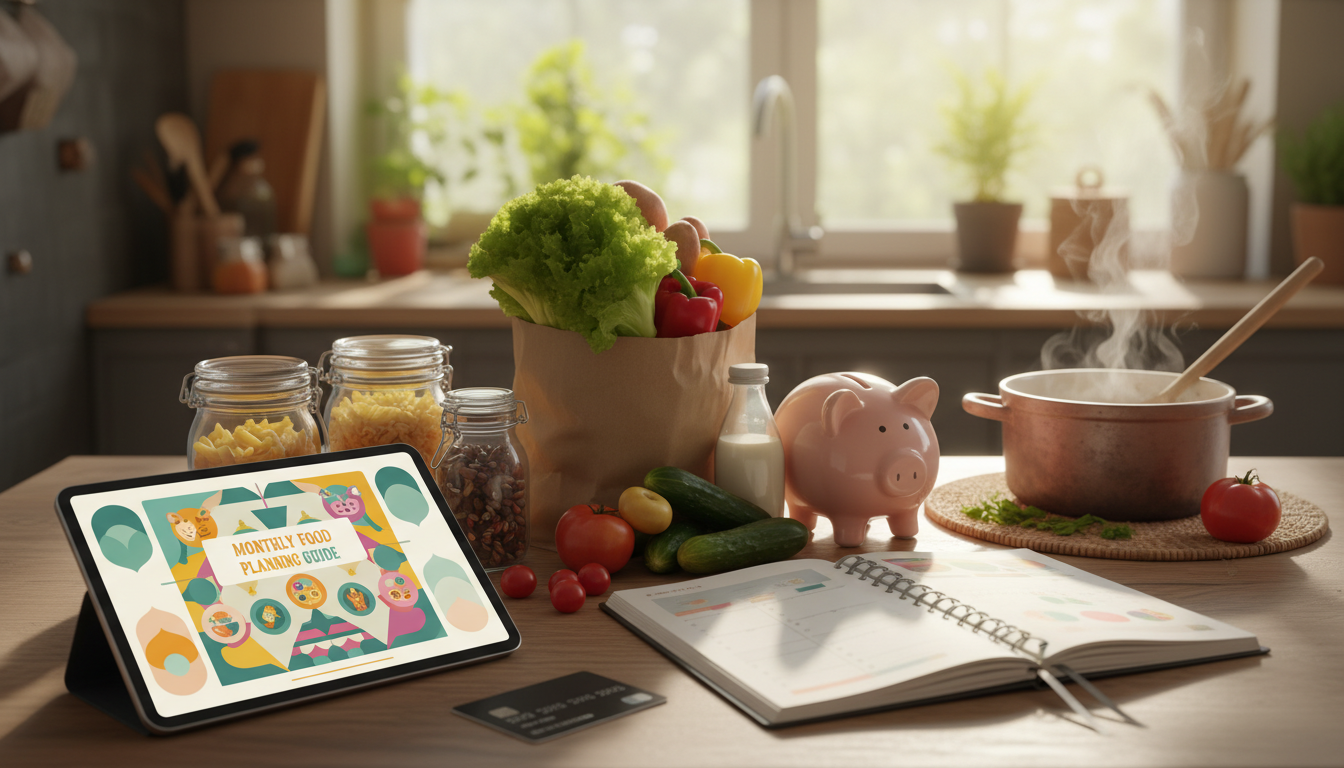
The Savvy Plate: Monthly Food Budgeting That Keeps Meals Fun and Flavorful
Stretching a monthly food budget doesn’t have to mean dull meals or stressful grocery runs. With a simple plan, a realistic spending target, and a repeatable shopping system, it’s possible to lower costs while still enjoying variety, treats, and the occasional splurge. The Savvy Plate approach is built for exactly that: a practical monthly meal planning rhythm paired with a smart grocery checklist to keep spending predictable without sacrificing what makes eating enjoyable.
Start with a monthly number that matches real life
A food budget works best when it reflects how life actually happens—busy days, last-minute invites, and the weeks when the pantry is suddenly out of everything at once.
- Review the last 4–8 weeks of spending across groceries, takeout, coffee runs, and delivery fees. If it’s food-related, count it. (If you need a reality-check benchmark, the USDA publishes monthly food cost estimates you can compare against: USDA Food Plans.)
- Set a baseline target, then add buffers for busy weeks, social plans, and pantry restocks so the budget doesn’t collapse mid-month.
- Use a “good-better-best” range (for example: $450 / $500 / $550) so you stay flexible while still tracking progress.
| Category | What it includes | Suggested share of budget |
|---|---|---|
| Groceries (core) | Proteins, produce, grains, dairy, staples | 65–75% |
| Treats & fun | Snacks, desserts, specialty drinks, weekend ingredients | 5–10% |
| Convenience | Rotisserie chicken, bagged salad, frozen meals, pre-cut items | 5–10% |
| Eating out | Restaurants, takeout, delivery fees/tips | 10–20% |
Build a monthly meal plan that doesn’t feel repetitive
The goal isn’t to plan 30 unique dinners. The goal is to make decisions once, then coast on structure—while still eating meals that feel different from each other.
- Pick 6–10 “anchors” for the month: reliable dinners that can rotate with different sauces, sides, or proteins (think: bowls, tacos, pasta, stir-fry, sheet-pan dinners, big salads).
- Change the flavor profile more than the ingredient list. One bag of rice can become taco bowls, teriyaki bowls, Mediterranean bowls, and fried rice with only a few swaps.
- Schedule two low-effort meals per week to prevent last-minute takeout (a freezer meal, a sheet-pan dinner, breakfast-for-dinner, or a “pantry pasta” night).
- Use a theme structure to reduce decision fatigue: 2 flexible nights, 2 planned favorites, 1 new recipe, 1 leftovers night, 1 eat-out night.
Quick anchor ideas (mix-and-match)
- Chicken thighs + roasted vegetables (switch seasoning: lemon-garlic, BBQ, Cajun)
- Taco night (ground turkey, beans, or shredded chicken; change toppings)
- Stir-fry (frozen veggies + sauce + rice/noodles)
- Pasta night (marinara, pesto, or creamy lemon; add a veg and protein)
- Breakfast-for-dinner (eggs, potatoes, toast, fruit)
A smart grocery checklist that cuts waste and impulse buys
A list is useful; a well-built list is a budget tool. The best checklist is organized the way you shop, tied to a spending cap, and grounded in what you already own.
Make the checklist “waste-aware”
Write quantities the way you’ll actually use them (for example, “2 lunches worth of deli turkey” or “3 salad nights of greens”). If you routinely lose produce, lean on longer-lasting options (cabbage, carrots, frozen vegetables) and reference safe storage times when you’re unsure; the FDA’s guidance is a handy reality check: FDA Food Storage (FoodKeeper).
Keep flavor high while keeping costs low
Keep meals balanced without overthinking
If you want a simple “plate” framework for shopping and meals, use the food group guidance at MyPlate as a flexible reference—especially helpful when you’re trying to stretch proteins with beans, grains, and vegetables.
A practical routine for the whole month
Using The Savvy Plate to make it easier
If you want a done-for-you system you can reuse every month, The Savvy Plate: How to Budget for Food Monthly Without Sacrificing Flavor or Fun | Budgeting eBook, Monthly Meal Planning Guide, Smart Grocery Checklist combines the pieces that make this approach stick: a realistic budgeting method, a monthly meal planning guide, and a practical grocery checklist that keeps you focused at the store.
Optional add-on for a “planning nook” at home
If meal planning happens at a small desk or kitchen corner, having a dedicated spot can make weekly resets feel effortless. A simple seating option like the Cute Cartoon Vanity Stool – Modern Minimalist Portable Shoe Changing Chair can work as a lightweight chair for a quick planning session, sorting coupons, or organizing your grocery list without taking up much space.
FAQ
How much should a monthly food budget be for a household?
It depends on household size, location, dietary needs, and how often eating out happens. Start with your last 4–8 weeks of total food spending, then set a realistic range with buffers for busy weeks and pantry restocks.
How can meals stay fun when cutting grocery costs?
Keep a few flavor multipliers on hand, rotate cuisines with themed nights, and plan treats so “fun” is intentional instead of impulsive. Adding one convenience shortcut each week can also prevent burnout and reduce expensive last-minute takeout.
What’s the easiest way to stop impulse buys at the store?
Shop from a store-section checklist and set a per-trip spending cap before you walk in. It also helps to avoid shopping hungry and to use a short “if on sale” list so extras stay controlled.
















Leave a comment