-
Shop
- Advanced Technologies
- AI Career Advantage Collection
- AI Skills Mastery 2026 Collection
- Beauty
- Best-Sellers
- Car Accessories
- Car Buying & Ownership
- Dating & Social Confidence
- Dating & Social Skills
- Denim
- 7FOR
- AGOLDE
- Antony Morato
- Armani Exchange
- Boss
- Brunello Cucinelli
- Calvin Klein Jeans
- Costume National
- Desigual
- Diesel
- Dolce & Gabbana
- Dsquared²
- Ermanno Scervino
- Fendi
- Gianni Lupo
- Guess Jeans
- Ichi
- Just Cavalli
- Lee
- Levi's
- Liu Jo
- Morgan De Toi
- Mother Denim
- Only
- Pepe Jeans
- Pinko
- Replay
- Valentino
- Vero Moda
- Digital Resources
- Education & Learning
- Family & Parenting
- Fashion
- Fashion Accessories
- Financial Education
- Gadgets
- Health & Beauty
- Health & Wellness
- Home & Garden
- Home Decor
- Home Styling & Organization
- Home Supplies
- Kids & Babies
- Kitchen
- Patio, Lawn & Garden
- Personal Growth
- Pet Care
- Pet Supplies
- Pets
- Sport & Outdoors
- Super Deals
- Wealth Building
- Budgeting & Saving
- Cryptocurrency Investing
- Debt Management
- Entrepreneurship & Business Growth
- Family Finance & Budgeting
- Financial Independence
- Financial Mindset & Psychology
- Financial Planning
- Frugal Living & Expense Hacks
- Goal Setting
- High-Income Skills
- Investing Basics
- Leadership
- Motivation
- Networking & Mentorship
- Passive Income Strategies
- Real Estate Investing
- Side Hustles
- Stock Market Investing
- Popular
- Best deals
Wooden Balance Beam Stepping Stones: Calm Montessori Play
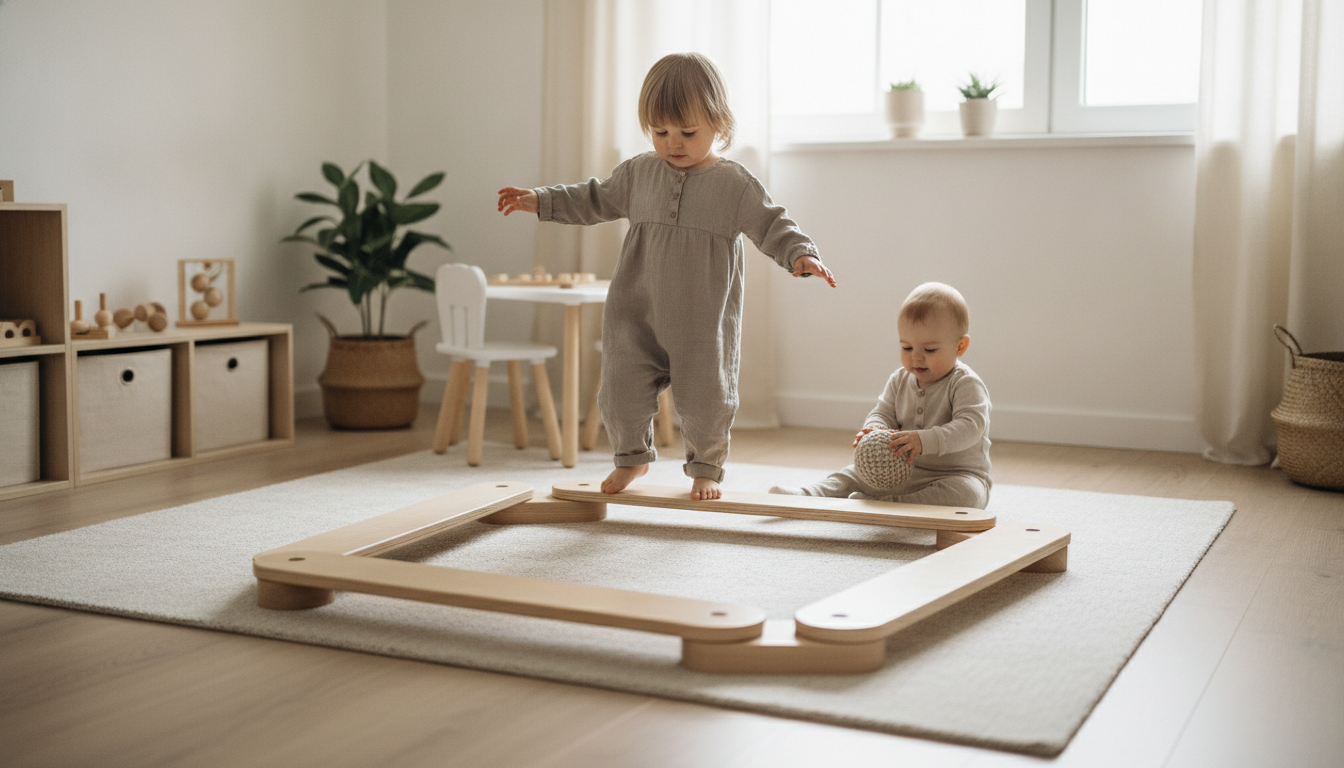
Wooden Balance Beam Stepping Stones for Kids: Calm, Active Play That Builds Real Skills
A wooden balance beam with stepping stones turns everyday play into a hands-on way to practice balance, coordination, and confident movement. This type of open-ended set can be arranged in many layouts, scaled to a toddler’s ability, and used for active games that still feel calm and purposeful—ideal for playrooms, bedrooms, and family spaces. When kids repeat a route, adjust their pace, and notice where their feet land, they’re building foundational movement skills that support everything from playground confidence to sitting still a little longer during quieter activities.
For a deeper look at how play supports development, the American Academy of Pediatrics highlights the lifelong value of play for healthy growth and connection (The Power of Play), and the CDC shares practical toddler developmental guidance for families (Positive Parenting Tips).
What This Set Encourages During Play
- Gross motor development: stepping, turning, and controlled stops build core strength and body awareness.
- Balance and coordination: walking a narrow path and transitioning between stones improves stability and foot placement.
- Focus and self-regulation: slow, deliberate movement supports attention and impulse control.
- Confidence through repetition: kids can start with easy routes and gradually try longer, more complex paths.
- Open-ended learning: children can invent rules, patterns, and obstacle courses without screens or batteries.
Montessori-Aligned Ways to Use a Balance Beam and Stepping Stones
These sets work especially well when the goal is purposeful movement rather than high-speed roughhousing. Keeping the tone “steady and intentional” helps toddlers feel successful—and it makes the activity easier to repeat daily.
- Start simple at floor level: make a straight line and invite heel-to-toe walking at the child’s pace.
- Try a “carry and walk” challenge: carry a soft toy or beanbag across to practice controlled movement.
- Add practical-life themes: deliver toy groceries, “mail,” or blocks from one end to the other.
- Create pattern routes: alternate stone colors or positions and ask the child to follow a repeating pattern.
- Make it social: take turns, practice waiting, and add gentle cooperative goals (for example, “we both finish the path”).
Safety and Setup Essentials for Toddlers
Because toddlers are still learning how to recover from a wobble, the setup matters as much as the toy itself. A safe layout makes practice feel inviting instead of intimidating.
- Place the set on a flat surface with enough clearance on both sides for safe stepping off.
- Use on a rug or play mat when possible to reduce slipping and soften landings.
- Begin with low-risk layouts: wider spacing and short paths before progressing to turns and longer sequences.
- Supervise early sessions, especially for younger toddlers or first-time users.
- Check pieces before play: ensure surfaces are smooth, stable, and free from damage.
Quick Setup Checklist for Safer Play
| Step | What to Do | Why It Helps |
|---|---|---|
| Surface | Set up on a level floor; add a rug or foam mat if available | Improves traction and cushions minor slips |
| Spacing | Start with short distances between stones and minimal turns | Builds success early and reduces missteps |
| Clear area | Keep a buffer zone around the path; remove hard toys nearby | Lowers the chance of bumps and trips |
| Progression | Increase length or complexity gradually over days/weeks | Matches challenge to skill for steady improvement |
| Supervision | Stay close for toddlers and beginners | Provides quick support and reinforces safe habits |
Play Ideas That Grow With Your Child
One of the best parts of a beam-and-stones set is how naturally it “levels up.” The same pieces can feel brand new just by changing spacing, adding a turn, or introducing a simple mission.
If you’d like broader movement ideas for young children, HealthyChildren.org (from the American Academy of Pediatrics) offers family-friendly activity guidance (HealthyChildren.org).
Where It Fits Best at Home
Product Spotlight: Wooden Balance Beam Stepping Stones for Kids
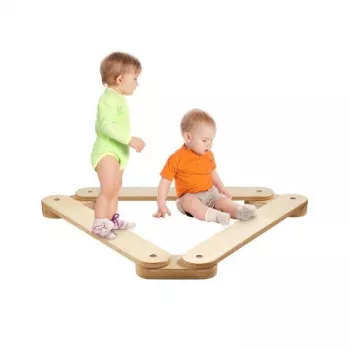
If you’re looking for a screen-free movement toy that still feels tidy and intentional, Wooden Balance Beam Stepping Stones for Kids – Montessori Toy for Toddlers is designed for balancing practice and open-ended obstacle-course layouts. It works for independent play (with supervision) and for gentle turn-taking games with siblings or friends—making it a smart gift when you want something skill-building, not a one-week novelty.
To support the routine side of active play, a simple “ready spot” nearby can help with shoes, socks, or resetting the course. A kid-friendly seat like the Cute Cartoon Vanity Stool – Modern Minimalist Portable Shoe Changing Chair can also double as a calm corner perch for a short break between turns.
Care and Longevity Tips
FAQ
What age is a wooden balance beam and stepping stone set best for?
Many families introduce this type of set during the toddler years (often around ages 1–4), but the best “start time” is when a child is walking steadily and can follow simple safety cues. Younger toddlers typically do best with close supervision and very short, low-risk layouts.
How can the difficulty be adjusted for a toddler?
Begin with a short, straight path, wider spacing, and minimal turns so success comes quickly. As balance improves, add length, gentle curves, carry-and-walk challenges, or simple pattern-following routes to keep it engaging without making it feel overwhelming.
Can it be used indoors safely?
Yes—set it on a flat surface, use a rug or foam mat for grip when possible, and clear a buffer zone around the route. For beginners, staying within arm’s reach helps reinforce slow, controlled steps and safe stepping off.
Recommended for you
The Savvy Plate: Monthly Food Budgeting Made Easy
Jul 29, 2026













Leave a comment