-
Shop
- Advanced Technologies
- AI Career Advantage Collection
- AI Skills Mastery 2026 Collection
- Beauty
- Best-Sellers
- Car Accessories
- Car Buying & Ownership
- Dating & Social Confidence
- Dating & Social Skills
- Denim
- 7FOR
- AGOLDE
- Antony Morato
- Armani Exchange
- Boss
- Brunello Cucinelli
- Calvin Klein Jeans
- Costume National
- Desigual
- Diesel
- Dolce & Gabbana
- Dsquared²
- Ermanno Scervino
- Fendi
- Gianni Lupo
- Guess Jeans
- Ichi
- Just Cavalli
- Lee
- Levi's
- Liu Jo
- Morgan De Toi
- Mother Denim
- Only
- Pepe Jeans
- Pinko
- Replay
- Valentino
- Vero Moda
- Digital Resources
- Education & Learning
- Family & Parenting
- Fashion
- Fashion Accessories
- Financial Education
- Gadgets
- Health & Beauty
- Health & Wellness
- Home & Garden
- Home Decor
- Home Styling & Organization
- Home Supplies
- Kids & Babies
- Kitchen
- Patio, Lawn & Garden
- Personal Growth
- Pet Care
- Pet Supplies
- Pets
- Sport & Outdoors
- Super Deals
- Wealth Building
- Budgeting & Saving
- Cryptocurrency Investing
- Debt Management
- Entrepreneurship & Business Growth
- Family Finance & Budgeting
- Financial Independence
- Financial Mindset & Psychology
- Financial Planning
- Frugal Living & Expense Hacks
- Goal Setting
- High-Income Skills
- Investing Basics
- Leadership
- Motivation
- Networking & Mentorship
- Passive Income Strategies
- Real Estate Investing
- Side Hustles
- Stock Market Investing
- Popular
- Best deals
Critical Thinking Problems: Meaning, Signs & Examples
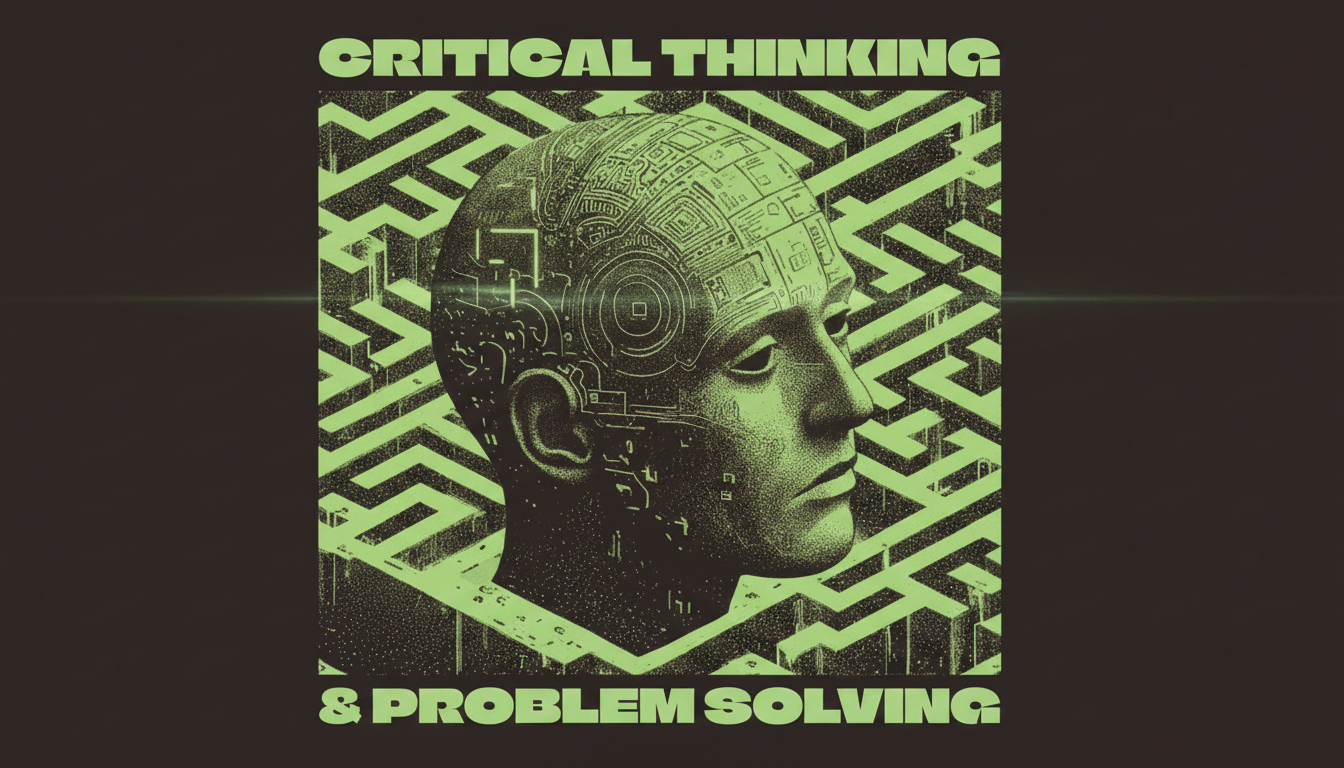
What are critical thinking problems?
Critical thinking problems are questions or situations that can’t be solved well by guesswork, habit, or a single “right” formula. They require evaluating information, spotting assumptions, weighing evidence, and choosing the most reasonable conclusion—even when the details are incomplete or competing.
Unlike routine tasks (where steps are fixed and outcomes are predictable), critical thinking problems ask for judgment. The goal is not just to answer, but to justify the answer with clear reasoning that can stand up to scrutiny.
What makes a problem “critical thinking” rather than simple?
These problems usually include uncertainty, ambiguity, or multiple plausible options. You might need to decide which facts matter, identify what’s missing, or separate strong evidence from weak claims. Often, the hardest part is defining the problem accurately before attempting to solve it.
Common signals include conflicting sources, hidden constraints, trade-offs, and the possibility of bias (your own or someone else’s). A critical thinking problem can be everyday—like choosing between products with mixed reviews—or high-stakes—like interpreting data to make a business decision.
Examples of critical thinking problems
Examples include: evaluating whether a claim is supported by credible evidence; deciding which option offers the best value when features differ; diagnosing why a process failed when multiple factors changed; or determining what information is needed before committing to a plan.
In each case, success depends on asking good questions, checking reliability, and making a defensible choice instead of chasing the quickest answer.
How to approach critical thinking problems
Start by clarifying the objective and constraints. Then gather relevant information, test assumptions, and look for alternative explanations. Compare options using consistent criteria (cost, quality, risk, time), and make a conclusion that matches the evidence available. If new information appears, revise the conclusion rather than forcing it to fit the original idea.
For a deeper breakdown and more examples, see the full guide here: https://elixirie.com/what-are-critical-thinking-problems/.
FAQ
How do you improve critical thinking skills?
Practice asking “What evidence supports this?” and “What would change my mind?” Compare multiple sources, look for assumptions, and review decisions afterward to see where reasoning was strong or weak.















Leave a comment