-
Shop
- Advanced Technologies
- AI Career Advantage Collection
- AI Skills Mastery 2026 Collection
- Beauty
- Best-Sellers
- Car Accessories
- Car Buying & Ownership
- Dating & Social Confidence
- Dating & Social Skills
- Denim
- 7FOR
- AGOLDE
- Antony Morato
- Armani Exchange
- Boss
- Brunello Cucinelli
- Calvin Klein Jeans
- Costume National
- Desigual
- Diesel
- Dolce & Gabbana
- Dsquared²
- Ermanno Scervino
- Fendi
- Gianni Lupo
- Guess Jeans
- Ichi
- Just Cavalli
- Lee
- Levi's
- Liu Jo
- Morgan De Toi
- Mother Denim
- Only
- Pepe Jeans
- Pinko
- Replay
- Valentino
- Vero Moda
- Digital Resources
- Education & Learning
- Family & Parenting
- Fashion
- Fashion Accessories
- Financial Education
- Gadgets
- Health & Beauty
- Health & Wellness
- Home & Garden
- Home Decor
- Home Styling & Organization
- Home Supplies
- Kids & Babies
- Kitchen
- Patio, Lawn & Garden
- Personal Growth
- Pet Care
- Pet Supplies
- Pets
- Sport & Outdoors
- Super Deals
- Wealth Building
- Budgeting & Saving
- Cryptocurrency Investing
- Debt Management
- Entrepreneurship & Business Growth
- Family Finance & Budgeting
- Financial Independence
- Financial Mindset & Psychology
- Financial Planning
- Frugal Living & Expense Hacks
- Goal Setting
- High-Income Skills
- Investing Basics
- Leadership
- Motivation
- Networking & Mentorship
- Passive Income Strategies
- Real Estate Investing
- Side Hustles
- Stock Market Investing
- Popular
- Best deals
160 PSI Portable Bike Floor Pump with Dual Valve Head
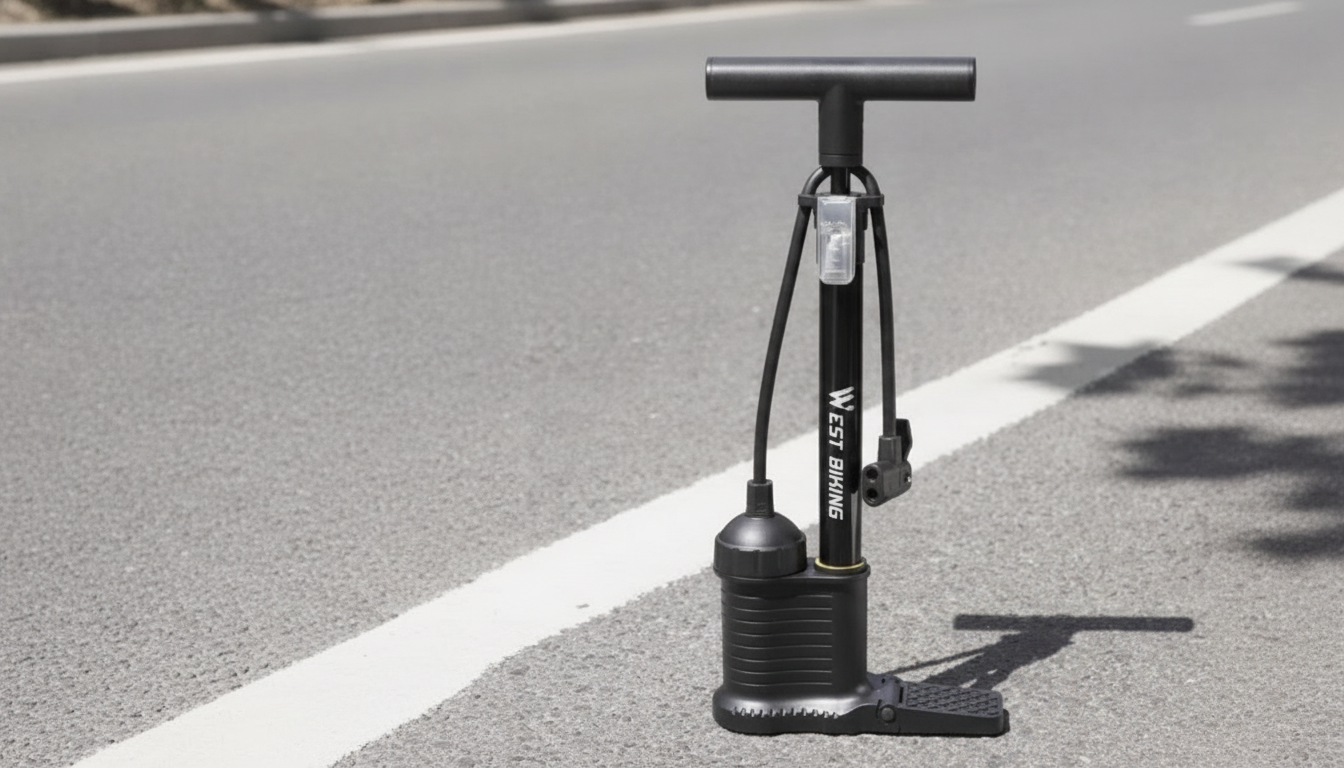
High-Pressure Portable Bike Floor Pump (160 PSI) with Dual-Valve Head
A compact floor pump that still reaches high pressures can simplify everything from topping off road tires before a ride to handling quick fixes on the go. This 160 PSI portable floor pump pairs a stable mini-floor design with a dual-valve head to work with common bike valve types without extra adapters. For more guidance, see The Best Frame Pump | Lab Tested & Ranked.
What Makes a Portable Floor Pump Different
Portable floor pumps sit in a sweet spot between tiny mini-pumps and full-size shop pumps. You get a more planted stance and more efficient strokes, but with a smaller footprint that’s easier to store and carry. For further reading, see Floor pumps.
- Combines the stability of a floor pump with a smaller footprint for apartments, garages, and travel kits.
- Higher-pressure capability helps road and hybrid riders hit firm tire pressures without excessive effort.
- Useful for frequent “top-offs” that improve rolling efficiency and reduce pinch-flat risk on lower pressures.
- A dual-valve head reduces setup time when switching between bikes with different valve standards.
160 PSI Capability: When It Matters
A 160 PSI maximum gives you headroom. Even if your tires never need anything close to that number, a higher ceiling typically makes it easier to reach common road-bike pressures without feeling like you’re maxing out the pump.
- Road tires often run at higher pressures than many hand pumps can comfortably achieve; a 160 PSI ceiling provides headroom for accurate fills.
- Higher maximum PSI does not mean every tire should be inflated near that number—always follow the tire sidewall range and rim limitations.
- For gravel, commuter, and MTB tires, the benefit is usually faster inflation and easier mid-range pressure adjustments rather than chasing maximum PSI.
- If using tubeless setups, controlled inflation is important; avoid sudden over-inflation that can unseat beads or cause sealant spray.
Typical Pressure Ranges by Riding Style
| Bike/Tire Type | Common PSI Range | Notes |
|---|---|---|
| Road (narrow tires) | 70–110 | Higher pressures are common; check sidewall and rider weight recommendations. |
| Gravel (moderate width) | 35–70 | Often tuned for surface and comfort; tubeless may run lower. |
| Hybrid/commuter | 50–85 | Balance comfort and efficiency; frequent top-offs help avoid squirm. |
| MTB | 18–35 | Varies by tire volume and terrain; tubeless commonly lower than tubes. |
For additional guidance, reputable tire makers and repair authorities publish pressure references and valve basics, including the Schwalbe Tire Pressure Guide and Park Tool’s Presta vs. Schrader overview.
Dual-Valve Head: Presta and Schrader Without Hassle
Mixed-bike households are common: a road bike with Presta valves, a commuter with Schrader valves, and maybe kids’ bikes that also use Schrader. A dual-valve head keeps one pump ready for all of them.
- Supports both common valve types so one pump can serve road bikes (often Presta) and many commuter/kids bikes (often Schrader).
- A secure head fit helps prevent air loss during pumping—especially important at higher pressures.
- Tip: fully seat the head before locking/engaging it (if the head uses a lock mechanism) to reduce leakage and preserve valve cores.
- If a valve seems to leak at the head, check that the valve core is snug and that the head’s internal gasket is clean and undamaged.
Portability and Stability for Everyday Use
Stability is the underrated advantage of a mini floor pump. The more controlled the pump feels under your hands, the easier it is to inflate accurately—especially once pressures climb above the “easy” range.
- A stable base and comfortable handle reduce fatigue compared with tiny mini-pumps, especially when inflating above 60 PSI.
- Portable floor pumps are easier to store in tight spaces while still feeling planted during use.
- For travel, prioritize quick setup: a pump that stands reliably and connects fast saves time during roadside repairs.
- Keep the pump clean and dry; grit in the head area can cause slow leaks and premature seal wear.
How to Use It: Fast, Accurate Inflation
A consistent routine prevents slow leaks at the head and helps you hit your target pressure without guesswork.
Matching the Pump to Common Scenarios
Care Tips for Long-Term Reliability
Product Snapshot
At-a-Glance Details
| Item | Detail |
|---|---|
| Product | High-Pressure Portable Bike Floor Pump 160 PSI with Dual-Valve Head |
| Max Pressure | 160 PSI |
| Valve Compatibility | Presta and Schrader (dual-valve head) |
| Price | $45.67 USD |
| Availability | In stock |
Shop In-Stock Picks
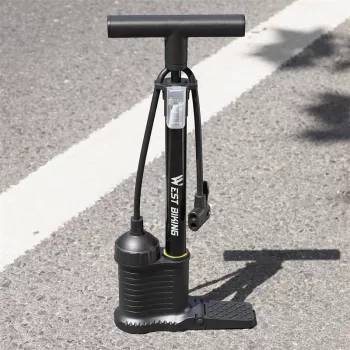
- High-Pressure Portable Bike Floor Pump 160 PSI with Dual-Valve Head (in stock)
- Only Women’s Classic Blue Jeans (in stock)
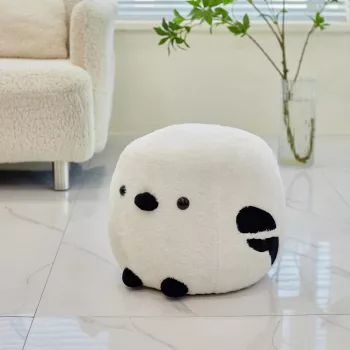
- Cute Cartoon Vanity Stool – Modern Minimalist Portable Shoe Changing Chair (in stock)
FAQ
Does a dual-valve head work with both Presta and Schrader without adapters?
Yes—dual-valve heads are designed to fit both Presta and Schrader valves without separate adapters. Make sure the head is set (or seated) correctly for the valve type and fully engaged before pumping to minimize leakage.
How much PSI should bike tires be inflated to?
Use the recommended PSI range printed on the tire sidewall and stay within your rim and tire limits. Ideal pressure also depends on rider weight, tire width, and the surface you ride on.
Is 160 PSI too much for a bike tire?
160 PSI is the pump’s maximum capability, not a target pressure. Most bike tires use lower pressures, so inflate gradually and stop within the tire’s stated range (and any rim limitations).
Recommended for you
Does Fleece Keep Dogs Warm? Best Uses and Limits
Aug 1, 2026












Leave a comment