-
Shop
- Advanced Technologies
- AI Career Advantage Collection
- AI Skills Mastery 2026 Collection
- Beauty
- Best-Sellers
- Car Accessories
- Car Buying & Ownership
- Dating & Social Confidence
- Dating & Social Skills
- Denim
- 7FOR
- AGOLDE
- Antony Morato
- Armani Exchange
- Boss
- Brunello Cucinelli
- Calvin Klein Jeans
- Costume National
- Desigual
- Diesel
- Dolce & Gabbana
- Dsquared²
- Ermanno Scervino
- Fendi
- Gianni Lupo
- Guess Jeans
- Ichi
- Just Cavalli
- Lee
- Levi's
- Liu Jo
- Morgan De Toi
- Mother Denim
- Only
- Pepe Jeans
- Pinko
- Replay
- Valentino
- Vero Moda
- Digital Resources
- Education & Learning
- Family & Parenting
- Fashion
- Fashion Accessories
- Financial Education
- Gadgets
- Health & Beauty
- Health & Wellness
- Home & Garden
- Home Decor
- Home Styling & Organization
- Home Supplies
- Kids & Babies
- Kitchen
- Patio, Lawn & Garden
- Personal Growth
- Pet Care
- Pet Supplies
- Pets
- Sport & Outdoors
- Super Deals
- Wealth Building
- Budgeting & Saving
- Cryptocurrency Investing
- Debt Management
- Entrepreneurship & Business Growth
- Family Finance & Budgeting
- Financial Independence
- Financial Mindset & Psychology
- Financial Planning
- Frugal Living & Expense Hacks
- Goal Setting
- High-Income Skills
- Investing Basics
- Leadership
- Motivation
- Networking & Mentorship
- Passive Income Strategies
- Real Estate Investing
- Side Hustles
- Stock Market Investing
- Popular
- Best deals
Critical Thinking eBook: Decision Tools & Brain Teasers

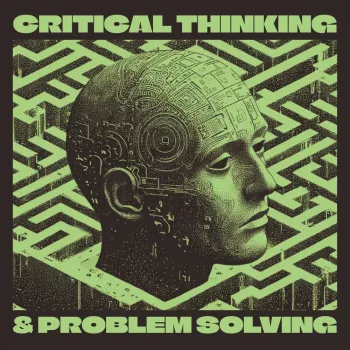
Critical Thinking & Problem Solving eBook: Practical Tools, Brain Teasers, and Everyday Decision Skills
Stronger thinking habits make everyday choices clearer—at work, at home, and under pressure. This digital guide focuses on practical critical thinking skills, step-by-step problem solving, and brain teasers that help build mental flexibility. Use it as a self-paced workbook to spot weak assumptions, reduce decision fatigue, and practice structured reasoning with real-life scenarios.
What This Digital Guide Helps Build
- Clearer reasoning: separating facts, assumptions, and interpretations
- Better decisions: using simple frameworks to compare options and trade-offs
- Faster problem solving: defining the real problem before jumping to solutions
- Mental flexibility: practicing multiple angles with puzzles and brain teasers
- Everyday life skills: communication, planning, and prioritization using structured thinking
For readers who want an organized way to practice, the Critical Thinking & Problem Solving eBook – Digital Download Guide for Smarter Decision Making is designed to feel less like “theory” and more like a working toolkit you can reuse whenever a decision starts to blur.
Who It’s For (and When It’s Most Useful)
- Students and lifelong learners building reasoning and study habits
- Professionals who make frequent judgment calls with limited information
- Parents and caregivers balancing competing priorities and time constraints
- Anyone who wants to reduce impulsive choices and improve follow-through
- Best moments to use it: before big purchases, during conflict, when overwhelmed, or when a choice feels unclear
Even a short session can help when your mind is spinning: the value is in slowing down just enough to see what’s driving the decision—then moving forward with a plan that fits your constraints.
Core Skills Covered: From Clarity to Action
- Problem definition: turning vague frustration into a solvable question
- Root-cause thinking: recognizing symptoms vs. causes and avoiding quick fixes
- Evidence checks: distinguishing reliable signals from noise
- Bias awareness: noticing common mental shortcuts that distort judgment
- Option design: generating alternatives and combining partial solutions
- Decision rules: setting criteria, weighting trade-offs, and committing to next steps
- Reflection loops: reviewing outcomes to improve future decisions
Many of these skills map to well-studied ideas in critical thinking and cognitive bias research. For deeper background, explore the Stanford Encyclopedia of Philosophy entry on critical thinking and the Decision Lab’s overview of cognitive biases.
Brain Teasers as Training: What They Improve
- Pattern recognition without rushing to the first obvious answer
- Working memory and attention control during multi-step problems
- Comfort with uncertainty: staying logical when a solution isn’t immediate
- Checking constraints: reading carefully, testing edge cases, and validating conclusions
- Transfer to daily life: practicing calm, structured thinking under mild pressure
Brain Teasers to Real-Life Thinking Transfers
| Type of challenge | What it trains | Everyday use |
|---|---|---|
| Logic puzzles | Consistency checking and inference | Evaluating claims and spotting contradictions |
| Lateral thinking riddles | Reframing and alternative hypotheses | Breaking stalemates in planning and negotiation |
| Math/number teasers | Step-by-step verification | Budgeting, estimating time, avoiding calculation slips |
| Pattern and sequence tasks | Signal detection and trend awareness | Reading dashboards, tracking habits, noticing changes early |
As a practical complement, it helps to learn what “confirmation bias” looks like in daily reasoning—especially when searching for evidence to support a first impression. The American Psychological Association’s definition of confirmation bias is a useful reference point when you’re reviewing your assumptions.
A Simple Decision Routine to Practice Alongside the eBook
- Define the decision: write one sentence describing what must be decided today
- List constraints: time, money, obligations, non-negotiables
- Choose 3–5 criteria: what “better” means (cost, speed, risk, values fit, impact)
- Generate at least 3 options: include one creative or hybrid option
- Test assumptions: note what would need to be true for each option to work
- Pick a next action: smallest reversible step that gathers information
- Post-check: after acting, review what was learned and adjust
This routine is intentionally lightweight. The goal is to create repeatable structure so decisions feel less like a wrestling match and more like a series of manageable steps.
How to Use the Digital Download Without Overwhelm
Small environmental tweaks can make the habit easier to keep. If you like having a dedicated “thinking spot,” a comfortable setup can reduce friction—whether that’s relaxing in Only Women’s Classic Blue Jeans during a short practice session or setting up a tidy corner with the Cute Cartoon Vanity Stool – Modern Minimalist Portable Shoe Changing Chair as a compact, flexible seat.
Digital Download Details and Practical Expectations
If you want one resource you can return to whenever life gets noisy, start with the Critical Thinking & Problem Solving eBook – Digital Download Guide for Smarter Decision Making and treat it like a reusable set of “decision templates,” not a one-time read.
Common Mistakes That Weaken Decision Quality (and How Practice Fixes Them)
FAQ
Is this eBook suitable for beginners to critical thinking?
Yes. It’s approachable for beginners because it uses step-by-step exercises, practical examples, and repeatable frameworks that don’t require prior training. Starting with short sessions (10–20 minutes) helps build consistency without burnout.
How long does it take to notice improvement in decision making?
Many people notice better clarity within days to a couple of weeks, especially around defining the real problem and setting criteria. Habit-level change usually takes longer and depends on repetition, so tracking a few real decisions can make progress easier to see.
Do brain teasers actually help with real-life problem solving?
They can, because they train transferable skills like attention control, verification, and reframing when you’re stuck. They help most when paired with structured decision frameworks and then applied to everyday choices (not kept as “puzzles only”).















Leave a comment