-
Shop
- Advanced Technologies
- AI Career Advantage Collection
- AI Skills Mastery 2026 Collection
- Beauty
- Best-Sellers
- Car Accessories
- Car Buying & Ownership
- Dating & Social Confidence
- Dating & Social Skills
- Denim
- 7FOR
- AGOLDE
- Antony Morato
- Armani Exchange
- Boss
- Brunello Cucinelli
- Calvin Klein Jeans
- Costume National
- Desigual
- Diesel
- Dolce & Gabbana
- Dsquared²
- Ermanno Scervino
- Fendi
- Gianni Lupo
- Guess Jeans
- Ichi
- Just Cavalli
- Lee
- Levi's
- Liu Jo
- Morgan De Toi
- Mother Denim
- Only
- Pepe Jeans
- Pinko
- Replay
- Valentino
- Vero Moda
- Digital Resources
- Education & Learning
- Family & Parenting
- Fashion
- Fashion Accessories
- Financial Education
- Gadgets
- Health & Beauty
- Health & Wellness
- Home & Garden
- Home Decor
- Home Styling & Organization
- Home Supplies
- Kids & Babies
- Kitchen
- Patio, Lawn & Garden
- Personal Growth
- Pet Care
- Pet Supplies
- Pets
- Sport & Outdoors
- Super Deals
- Wealth Building
- Budgeting & Saving
- Cryptocurrency Investing
- Debt Management
- Entrepreneurship & Business Growth
- Family Finance & Budgeting
- Financial Independence
- Financial Mindset & Psychology
- Financial Planning
- Frugal Living & Expense Hacks
- Goal Setting
- High-Income Skills
- Investing Basics
- Leadership
- Motivation
- Networking & Mentorship
- Passive Income Strategies
- Real Estate Investing
- Side Hustles
- Stock Market Investing
- Popular
- Best deals
Motivate Enneagram 6s: Clarity, Trust, and Steady Action

Steady Strength: Motivating the Loyal Enneagram 6 with Clarity and Trust
Loyal Enneagram 6s thrive when they feel prepared, supported, and included. They bring commitment, careful thinking, and a steady sense of responsibility—yet motivation can stall when uncertainty rises or when expectations feel vague. The most effective way to energize a Type 6 at work, at home, or in personal goals is to pair reassurance with clear structure and meaningful autonomy, so they can move forward with confidence instead of second-guessing.
What the Loyal Type 6 Needs to Feel Motivated
Type 6 motivation is less about hype and more about stability. When the environment feels predictable and fair, their natural loyalty turns into consistent action.
- Clear expectations: Defined roles, timelines, and what “good” looks like reduce mental load and second-guessing.
- Psychological safety: Respectful tone, consistent behavior, and follow-through build trust faster than big promises.
- Shared context: Explaining the “why” helps a 6 commit with confidence and anticipate downstream risks.
- Permission to ask questions: Curiosity and verification are strengths; treat them as due diligence, not defiance.
- A stable base: Routines, check-ins, and predictable touchpoints help motivation stay steady over time.
For a deeper look at core Type 6 patterns, the Enneagram Institute’s Type 6 overview is a helpful reference point.
Common Motivation Blockers (and What They Usually Signal)
When a Loyalist slows down, it’s often a signal that something in the system feels uncertain—not that they don’t care.
- Analysis paralysis: Often a sign that priorities are unclear or risks feel unspoken.
- Testing or skepticism: Commonly a bid for reliability—proof that support won’t vanish under pressure.
- Procrastination: Can indicate fear of getting it wrong, or an environment where mistakes are punished.
- Irritability or defensiveness: May surface when a 6 feels cornered, rushed, or excluded from key decisions.
- Overchecking and reassurance-seeking: Typically increases when plans change quickly or communication is inconsistent.
Instead of pushing harder, get curious: “What feels unclear?” and “What would help you feel confident taking the next step?” Those questions remove friction without shaming the hesitation.
Practical Ways to Motivate a Type 6 (Work, Home, and Personal Goals)
Motivating a Type 6 works best when it’s concrete. Replace vague encouragement with a plan they can trust.
- Name the priorities out loud: Set the top 1–3 goals, then explicitly de-scope what does not matter right now.
- Translate ambiguity into steps: Break work into the next visible action, a checkpoint, and a final definition of done.
- Offer a “risk review” window: Invite concerns early (and time-box it) so the 6 can commit without lingering doubt.
- Use consistent check-ins: Short weekly or twice-weekly touchpoints reduce spiraling and prevent last-minute surprises.
- Give autonomy with guardrails: “Here’s the outcome and constraints—choose the method” supports confidence and ownership.
- Reinforce reliability: Keep agreements, show up on time, and communicate changes early; motivation rises when trust is predictable.
- Acknowledge courage: Highlight the 6’s steadiness, loyalty, and preparedness, especially after navigating uncertainty.
One practical bonus: when Type 6s experience repeated “I can handle this” moments, their self-efficacy strengthens—an evidence-backed contributor to persistence and follow-through. The APA definition of self-efficacy captures why small, credible wins matter more than big pep talks.
Supportive Language That Builds Momentum
Type 6s tend to respond best to language that is specific, respectful, and steady. The goal is to reduce uncertainty without taking away their agency.
- Replace vague praise with concrete trust: “The way you caught that issue early helped the whole team.”
- Use clarity statements: “Here’s what success looks like, and here’s what’s flexible.”
- Normalize questions: “Ask anything now so we can move forward with confidence.”
- Confirm backup plans: “If X happens, we’ll do Y—so you’re not alone in this.”
- Avoid surprise pressure: Give a heads-up before changes and explain the reason behind the shift.
Quick Motivation Map for Enneagram 6
| Situation | What Helps Most | What to Avoid |
|---|---|---|
| New project with unclear expectations | Define outcome, timeline, and first step; provide examples | “Just figure it out” with no context |
| High-stakes decision | Invite concerns early; agree on criteria; confirm a contingency plan | Rushing, dismissing fears, or changing criteria midstream |
| After a mistake or setback | Separate person from problem; outline corrective steps; reaffirm support | Public criticism, sarcasm, or withdrawing communication |
| Motivation dip / procrastination | Time-box planning; pick the next action; schedule a check-in | Endless hypotheticals, vague deadlines, or guilt-based pressure |
| Team conflict or uncertainty | Clarify roles, communication channels, and decision owner | Mixed messages, secret side conversations, or inconsistent follow-through |
Boundaries That Keep Encouragement from Turning into Enabling
Using a Checklist and Mini-Plan to Stay Consistent
Recommended tools and supports (digital + everyday comfort)
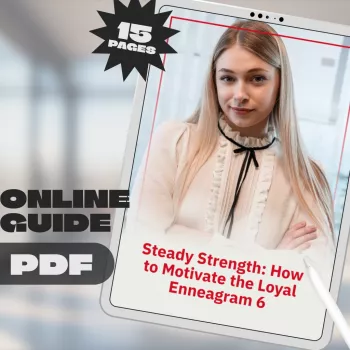
- Steady Strength: How to Motivate the Loyal Enneagram 6 | Enneagram 6 Motivation Guide | Digital Download eBook & Checklist (clear scripts, checklists, and mini-plans for steady follow-through)
- Cute Cartoon Vanity Stool – Modern Minimalist Portable Shoe Changing Chair (a simple way to make a consistent “planning spot” for weekly check-ins)
- Only Women’s Classic Blue Jeans (an easy, reliable staple for days when decision fatigue is high)
FAQ
How can a Type 6 stay motivated without constant reassurance?
Use a scheduled check-in plus a written plan: define success, list the top risks with one contingency each, and commit to a decision deadline. When anxiety spikes, rely on evidence-based self-talk and choose one concrete next action to regain momentum.
What is the fastest way to motivate a Type 6 at work?
Clarify priorities and decision criteria, invite questions early, and confirm reliable support (who to ask and when updates happen). Motivation usually rises quickly when expectations stop shifting and communication becomes predictable.
What should be avoided when encouraging a Loyal Enneagram 6?
Avoid dismissing concerns, using surprise pressure, shifting expectations midstream, or treating questions like disloyalty. Consistency, transparency, and a respectful tone reduce defensiveness and keep trust intact.
Recommended for you


120,000 BTU Outdoor Propane Tankless (5.1 GPM) Guide
Jul 28, 2026













Leave a comment