-
Shop
- Advanced Technologies
- AI Career Advantage Collection
- AI Skills Mastery 2026 Collection
- Beauty
- Best-Sellers
- Car Accessories
- Car Buying & Ownership
- Dating & Social Confidence
- Dating & Social Skills
- Denim
- 7FOR
- AGOLDE
- Antony Morato
- Armani Exchange
- Boss
- Brunello Cucinelli
- Calvin Klein Jeans
- Costume National
- Desigual
- Diesel
- Dolce & Gabbana
- Dsquared²
- Ermanno Scervino
- Fendi
- Gianni Lupo
- Guess Jeans
- Ichi
- Just Cavalli
- Lee
- Levi's
- Liu Jo
- Morgan De Toi
- Mother Denim
- Only
- Pepe Jeans
- Pinko
- Replay
- Valentino
- Vero Moda
- Digital Resources
- Education & Learning
- Family & Parenting
- Fashion
- Fashion Accessories
- Financial Education
- Gadgets
- Health & Beauty
- Health & Wellness
- Home & Garden
- Home Decor
- Home Styling & Organization
- Home Supplies
- Kids & Babies
- Kitchen
- Patio, Lawn & Garden
- Personal Growth
- Pet Care
- Pet Supplies
- Pets
- Sport & Outdoors
- Super Deals
- Wealth Building
- Budgeting & Saving
- Cryptocurrency Investing
- Debt Management
- Entrepreneurship & Business Growth
- Family Finance & Budgeting
- Financial Independence
- Financial Mindset & Psychology
- Financial Planning
- Frugal Living & Expense Hacks
- Goal Setting
- High-Income Skills
- Investing Basics
- Leadership
- Motivation
- Networking & Mentorship
- Passive Income Strategies
- Real Estate Investing
- Side Hustles
- Stock Market Investing
- Popular
- Best deals
Compare Job Offers With AI: Pay, Benefits, Fit
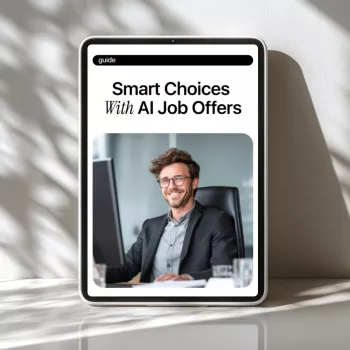
Smart Choices With AI Job Offers: A Clear, Confident Way to Compare Roles, Pay, and Benefits
Choosing between job offers can get messy fast—different salaries, bonus structures, equity, benefits, work styles, and growth paths rarely line up neatly. The difference between “best on paper” and “best for real life” often comes down to details that aren’t obvious in a recruiter email. A simple, consistent framework—paired with AI-assisted summaries and scoring—can turn multiple offers into a clear side-by-side comparison so the final decision feels grounded, explainable, and aligned with real priorities.
When job offers feel impossible to compare
Most offers are written to be persuasive, not comparable. That’s why it’s common to feel stuck even when two options look “good.” A few patterns create confusion quickly:
- Compensation shows up in different formats (base vs. total comp vs. variable pay), making “higher” hard to define.
- Benefits vary in hidden ways (deductibles, employer contributions, coverage tiers, waiting periods).
- Work style differences (remote/hybrid, travel, schedule, autonomy) can outweigh a salary gap.
- Career trajectory is uncertain: title inflation, unclear leveling, or limited internal mobility.
- Decision fatigue kicks in: too many criteria, not enough structure to rank trade-offs.
- Pressure and deadlines can lead to choices that are hard to justify later.
Structure helps most when emotions are high and timelines are short—because it keeps the comparison consistent even if the offers aren’t.
What the Smart Choices With AI Job Offers digital download helps organize
A reliable comparison starts with capturing the same categories for every offer, using the same units. The Smart Choices With AI Job Offers – Career Decisions Guide (Digital Download) is designed to make that easier by providing a consistent collection method, AI-friendly prompts, and a weighted scoring approach that reflects what matters most (not what’s loudest on the page).
- A structured method to collect consistent details from each offer (so comparisons aren’t apples-to-oranges).
- AI-friendly prompts to summarize offers, extract key differences, and flag missing information to clarify with recruiters.
- A weighted scoring approach to rank offers by priorities—not just headline pay.
- A benefits-focused checklist that surfaces costs and coverage differences often overlooked.
- A decision narrative template to explain the final choice clearly—to yourself, a partner, or a mentor.
Offer details to capture before comparing
| Category | What to record | Why it changes the decision |
|---|---|---|
| Compensation | Base salary, bonus targets, commission terms, equity details, sign-on/relocation, review cycle | Total value and risk vary with performance gates and vesting |
| Benefits | Medical plan type, premiums, deductible, employer HSA/FSA, retirement match, PTO, parental leave | Out-of-pocket costs and time off can outweigh pay differences |
| Work setup | Remote/hybrid expectations, core hours, travel %, equipment stipend, office commute | Daily quality-of-life and sustainability |
| Role scope | Responsibilities, success metrics, team size, on-call expectations, tools/stack | Defines workload and learning curve |
| Growth | Leveling, promotion cadence, training budget, mentorship, internal mobility | Long-term upside and skill development |
| Stability | Runway/financial health (where appropriate), org changes, contract terms, probation period | Changes risk and predictability |
For a practical setup while you compare offers (especially during calls and negotiation), a comfortable, dedicated spot can help you stay organized. If you’re refreshing a home office corner, the Cute Cartoon Vanity Stool – Modern Minimalist Portable Shoe Changing Chair is a simple add-on for a quick, flexible seat near your desk or entryway.
A practical AI-assisted workflow for comparing offers
AI works best here as a formatter and a consistency engine—helping turn messy text into a structured view you can evaluate. A practical workflow looks like this:
Comparing benefits without missing the expensive details
Benefits are where “close offers” often separate. Two roles can have the same base pay but wildly different real annual costs depending on health coverage, retirement match, and time off. For U.S. benefits norms and reference points, the U.S. Bureau of Labor Statistics Employee Benefits tables are a helpful benchmark.
- Health insurance: Premiums are only one piece—deductible, coinsurance, out-of-pocket max, and network rules drive real annual cost.
- HSAs/FSAs: Employer HSA contributions and eligibility can materially change your net; verify rules using IRS Publication 969.
- Retirement: Match percentage, vesting schedule, and eligibility timing determine how much is actually earned; plan protections often fall under ERISA guidance from the U.S. Department of Labor.
- Paid time off: Separate buckets (vacation/sick), rollover policies, and shutdown periods change true flexibility.
- Family benefits: Parental leave length, pay percentage, childcare support, dependent care accounts.
- Red flags: Vague benefit summaries, missing plan documents, or “unlimited PTO” without usage norms on the team.
Using AI responsibly for career decisions
Making the final call: clarity, confidence, and next steps
If you want one place to keep your inputs, scores, and decision narrative organized, the Smart Choices With AI Job Offers digital download is a focused option for turning multiple offers into a decision you can explain—and stand behind.
FAQ
How can AI help compare job offers without making the decision for you?
AI can standardize and summarize each offer, surface differences, and help you score options using weights you choose. You still set the priorities, verify the facts, and decide which trade-offs are worth it.
What information should be collected from each offer before scoring them?
Collect base pay, variable pay (bonus/commission), equity terms, sign-on/relocation, benefits plan details, retirement match and vesting, PTO, work setup expectations, role scope and success metrics, growth path, and any stability or contract terms that affect risk.
How do you compare equity or bonuses between offers?
Annualize what you can, then model conservative/base/upside scenarios that reflect vesting schedules and performance gates. Compare using a risk-adjusted view—headline numbers matter less than how likely you are to actually receive them.
Recommended for you


AI for Creative Teams: A 5-Stage Workflow Guide
Jul 13, 2026













Leave a comment